How Much Bitcoin Does Venezuela Have and Could the US Seize It
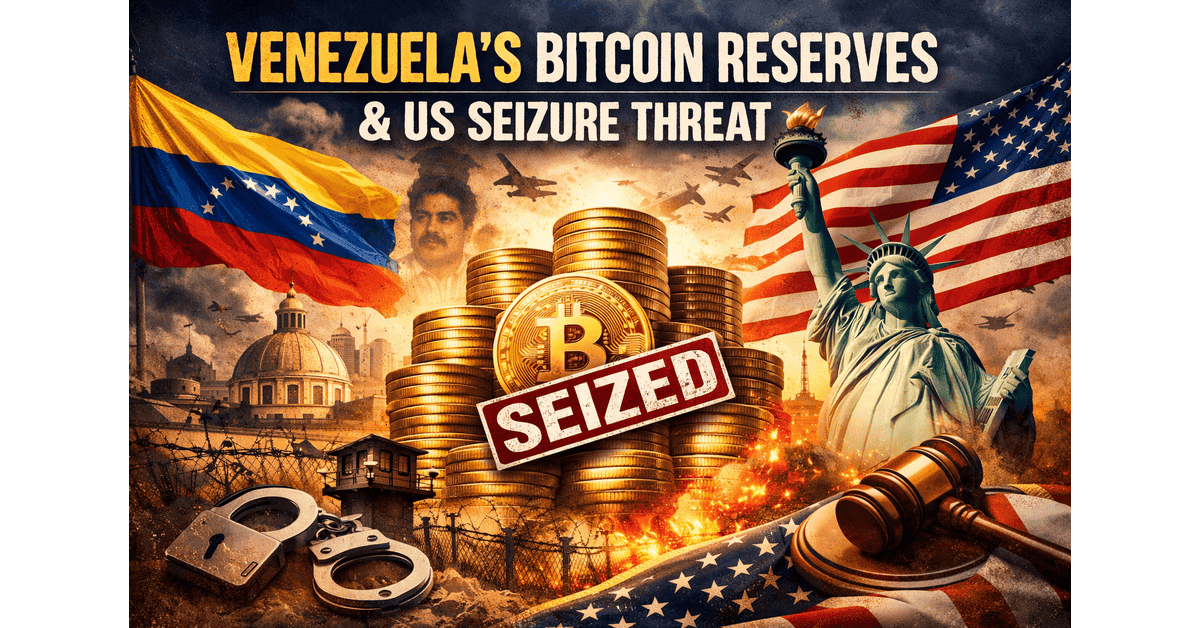
Over the past year Venezuela has quietly become the center of one of the most controversial discussions in Bitcoin and geopolitics. Following the arrest and removal of Nicol�s Maduro reports began circulating that Venezuela may be sitting on one of the largest Bitcoin reserves in the world. Estimates suggest the country could hold between six hundred thousand and six hundred sixty thousand Bitcoin which at current prices would be worth roughly sixty billion dollars or more. If accurate this would place Venezuela among the largest Bitcoin holders on the planet rivaling major institutions and nation states.
What makes this situation unique is that these Bitcoin holdings are not publicly visible on known government wallets. Unlike countries that openly disclose or indirectly reveal their Bitcoin reserves through transparent on chain activity Venezuela�s alleged holdings are often described as a hidden or shadow reserve. Public blockchain data only shows a very small amount of Bitcoin directly linked to known Venezuelan government wallets. Supporters of the larger reserve theory argue that the majority of the Bitcoin is held in wallets that were intentionally structured to avoid detection.
According to these claims Venezuela began accumulating Bitcoin as early as 2018 when sanctions tightened and access to global banking systems became increasingly restricted. During this period the government reportedly converted gold reserves into Bitcoin and later used oil exports to settle payments in stablecoins which were then converted into Bitcoin. This strategy would have allowed the regime to move value globally without relying on traditional financial rails that were vulnerable to seizure or freezing.
Since Maduro�s arrest speculation has shifted from how Venezuela acquired Bitcoin to what might happen to it next. One of the most discussed possibilities is whether the United States could seize these Bitcoin holdings and add them to its own reserves. The US government already holds a significant amount of Bitcoin obtained through law enforcement seizures tied to criminal activity dark markets and fraud cases. These assets are typically held by federal agencies and occasionally auctioned or retained.
If Venezuelan Bitcoin was proven to be acquired through sanction evasion corruption or illicit activity the US could pursue legal avenues to confiscate it. This would likely depend on access to private keys cooperation from individuals who control the wallets or court rulings that force disclosure. Unlike gold or cash Bitcoin cannot simply be physically taken. Control over the asset ultimately comes down to control of the private keys.
Adding Venezuelan Bitcoin to US reserves would be a major geopolitical event. Tens of billions of dollars in Bitcoin moving under US control would significantly reduce available supply and could further legitimize Bitcoin as a strategic asset. It would also signal a shift in how digital assets are treated at the highest levels of government from speculative instruments to sovereign reserve assets.
That said it is important to acknowledge the uncertainty surrounding these claims. There is currently no publicly verifiable on chain evidence proving Venezuela holds hundreds of thousands of Bitcoin. Critics argue that the estimates may be exaggerated or based on incomplete intelligence. Until wallet addresses or confirmed transaction histories are revealed the true size of Venezuela�s Bitcoin holdings remains unproven.
Even if the reserves do exist seizing them would not be straightforward. International law sovereign rights and the decentralized nature of Bitcoin all present serious obstacles. Without access to private keys Bitcoin cannot be moved regardless of political power. This reality highlights one of Bitcoin�s most important properties its resistance to confiscation when properly secured.
Regardless of the outcome the situation underscores a larger trend. Bitcoin is no longer just a retail investment or a speculative asset. It is increasingly intertwined with geopolitics sanctions and national power. Whether Venezuela truly holds a massive Bitcoin reserve and whether the United States could ever claim it may remain unanswered but the discussion itself shows how deeply Bitcoin has entered the global financial stage.