New vs Used ASIC Miners: What You Need to Know Before Buying
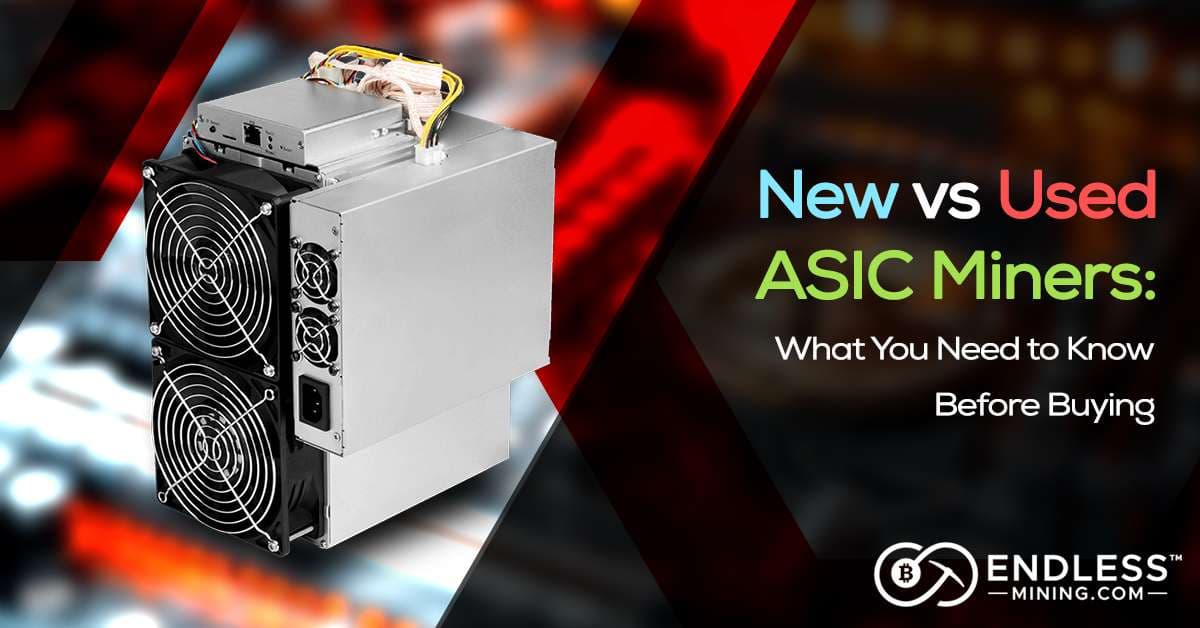
If you are serious about crypto mining, the decision between buying new vs used ASIC miners is one of the most consequential choices you will make. Get it right, and you can build a profitable operation with strong ROI. Get it wrong, and you may find yourself holding an expensive piece of hardware that barely covers its own electricity bill � or worse, one that fails within weeks of purchase.
This guide cuts through the noise with a thorough, side-by-side breakdown of new and used ASIC miners. We cover everything from upfront costs and hashrate performance to thermal wear, warranty implications, resale value, and market timing. Whether you are a first-time miner or scaling an existing operation, the information here will help you make a smart, informed decision.
What Is an ASIC Miner and Why Does the Condition Matter?
An Application-Specific Integrated Circuit (ASIC) miner is a piece of computing hardware engineered exclusively to perform the hashing calculations required to mine a specific cryptocurrency � most commonly Bitcoin (SHA-256 algorithm), Litecoin (Scrypt), or Ethereum Classic (Ethash). Unlike general-purpose GPUs or CPUs, ASIC miners are purpose-built, making them dramatically faster and more energy-efficient for their designated task.
The condition of your ASIC miner � whether it is factory-fresh or previously operated � affects virtually every dimension of your mining economics: daily revenue, power consumption, heat output, maintenance demands, and long-term reliability. As the global ASIC market matures and second-hand units flood platforms like eBay, EndlessMining.com, and specialized mining equipment marketplaces, understanding the trade-offs between new and pre-owned machines has never been more important.
The True Cost of a New ASIC Miner
Upfront Purchase Price
New ASIC miners come with a premium price tag. A flagship unit like the Bitmain Antminer S21 Pro or MicroBT Whatsminer M60S can command anywhere from $2,500 to over $10,000 at retail, depending on the hashrate tier and current market conditions. During bull markets, manufacturers frequently sell out months in advance, pushing buyers toward secondary markets at inflated markups � sometimes 30�80% above MSRP.
The upfront investment is significant, but it is the entry point for the most up-to-date technology on the market. Newer ASIC generations typically deliver improved joules per terahash (J/TH) efficiency ratios, meaning you spend less on electricity per unit of hash power produced.
Efficiency and Hashrate Performance
Modern ASIC miners are engineered on increasingly refined semiconductor nodes. Current-generation machines frequently achieve efficiencies below 20 J/TH, while older units from three to five years ago may consume 50�100+ J/TH. This difference in efficiency is not trivial � over 12 months of continuous operation, it can represent thousands of dollars in electricity costs depending on your power rate.
For example, if you are paying $0.07 per kWh and running a 3,500W machine at 100 J/TH versus a 1,700W machine at 17 J/TH with similar hashrate, the older unit could cost you an additional $1,500 or more per year in power alone. Efficiency matters enormously at scale.
Manufacturer Warranty and After-Sales Support
One of the most underrated advantages of purchasing a new ASIC miner is the manufacturer's warranty, typically ranging from 180 days to 12 months, depending on the brand. Bitmain, MicroBT, Canaan, and other major manufacturers provide repair or replacement coverage for defective units, protection that simply does not transfer when you buy second-hand from a private seller.
New units also come with access to official firmware updates, technical support, and in some cases regional service centers. For large-scale operations where downtime is costly, this level of support infrastructure is genuinely valuable.
Lead Times and Supply Chain Delays
A frustrating reality of buying new ASIC miners is that popular models frequently have long delivery windows. During periods of high demand � typically coinciding with rising Bitcoin prices � delivery lead times can stretch from 8 weeks to 6 months or beyond. This means you may purchase a miner at a price reflecting today's profitability but not deploy it until market conditions have shifted significantly.
Buyers should factor in opportunity cost during this waiting period. Every week your capital is tied up in pre-ordered hardware is a week it is not hashing.
Depreciation Curve
New ASIC miners depreciate rapidly. The introduction of a next-generation model from a major manufacturer can cut the resale value of current-generation units by 20�40% almost overnight. Buyers who purchase new at peak prices and then experience a bear market or a new hardware cycle can find themselves significantly underwater on their investment if they need to liquidate.
The Real Story Behind Used ASIC Miners
Lower Acquisition Cost: The Primary Appeal
The most obvious advantage of used ASIC miners is price. Depending on the model, age, and condition, you can acquire second-hand units at 30�70% below the original retail price. In a compressed margin environment � where electricity costs are rising and Bitcoin's block reward diminishes with each halving � a lower entry cost directly extends the runway before a miner hits its break-even point.
For budget-conscious miners or those testing a new location's power costs, used hardware allows for meaningful hashrate capacity at a fraction of the capital outlay.
Understanding Miner Lifespan and Wear
ASIC miners are industrial machines designed to run continuously � typically 24 hours a day, 7 days a week, 365 days a year. Most reputable manufacturers design their hardware for a useful operational life of 3�5 years under normal conditions, though many units remain functional well beyond that range.
However, the condition of a used miner is heavily influenced by how it was operated, not just how long. A machine that ran in a poorly ventilated shipping container in a hot climate for two years may be in far worse shape than a unit from a professional data center that maintained strict temperature and humidity controls for the same period.
Key indicators of wear to evaluate in a used miner include:
Fan Condition: ASIC miners rely on high-speed cooling fans that are among the first components to degrade. Fan failure causes thermal throttling and, in severe cases, irreversible chip damage. Always check whether all fans are operational, listen for irregular noise, and inquire about replacement history.
Hashboard Integrity: The hashboards contain the ASIC chips responsible for mining. Bad chips, degraded solder joints, and corroded traces are common failure modes in heavily used units. Request mining logs or current hashrate data to verify that the machine is performing within expected parameters.
Power Supply Unit (PSU) Health: Some sellers offer ASIC miners without their original PSUs, which adds to your total cost. Even when included, used PSUs may operate at reduced efficiency or carry hidden reliability issues.
Corrosion and Physical Damage: Inspect photos carefully for signs of oxidation, burn marks, or physical impact damage. Overclock-related damage is also common in used hardware, as previous owners may have pushed chips beyond their rated thresholds.
The Verification Problem in the Secondary Market
Unlike buying a new unit directly from Bitmain or MicroBT with a clear chain of custody, the used ASIC market is fragmented and largely unregulated. Miners change hands through direct sales, auction platforms, mining farm liquidations, and broker networks � each with varying levels of transparency.
Common risks in the used ASIC market include:
Misrepresented hashrate � Sellers may quote peak or theoretical hashrate figures rather than stable real-world output. Always request 24�48 hours of mining pool data showing actual hash submissions.
Undisclosed repairs � A miner with repaired or replaced hashboards may perform normally in the short term but carry elevated failure risk. Ask directly whether any boards have been replaced and verify with serial number checks where possible.
Counterfeit units � Particularly in lower-cost segments, counterfeit or heavily cloned machines have appeared in the market. Purchasing from established resellers or mining farm liquidation events reduces this risk significantly.
Firmware manipulation � Modified firmware can falsely inflate reported hashrate figures during a short-term test while delivering less actual hash power during extended operation.
Operational History: Mining Farm Liquidations vs. Individual Sellers
Mining farm liquidations are generally a more reliable source of used ASIC miners than individual sellers. When a large-scale operation decommissions hardware, units tend to be:
- Maintained under professional data center conditions
- Available with documented operational history
- Sold in bulk, sometimes with basic testing guarantees
- Priced competitively due to volume
Individual sellers represent more variable quality. Some are careful hobbyists upgrading to newer hardware; others are offloading machines that have already begun to show problems. Diligence is essential.
New vs Used ASIC Miners: A Direct Comparison
Price and ROI Timeline
The return on investment calculation is where the new vs used decision becomes most concrete. Consider a simplified example using Bitcoin mining:
A new Antminer S21 Pro (200 TH/s, ~17.5 J/TH) might cost $6,000 new, consuming approximately 3,500W. At $0.07/kWh and current network difficulty, monthly gross revenue might be approximately $320�$380 depending on Bitcoin price. Monthly electricity cost would be approximately $175�$185, leaving a monthly net of roughly $140�$200 before pool fees and maintenance. Full ROI at that rate: approximately 30�40 months.
A used Antminer S19 Pro (110 TH/s, ~29.5 J/TH) purchased for $1,500 consumes approximately 3,250W. Monthly gross revenue at the same Bitcoin price would be approximately $175�$210. Monthly electricity cost would be approximately $165�$175, leaving a much tighter net margin � perhaps $10�$40 per month. Full ROI: 40�80 months, with higher risk of mechanical failure extending or eliminating profitability.
This example illustrates that while the used miner costs less upfront, its inferior efficiency often erodes the advantage. The new miner delivers better hashrate per watt and stronger long-term margins. However, if your electricity rate is lower � say $0.03�$0.04/kWh � the used miner's economics improve substantially, making the lower purchase price more impactful.
Electricity Cost as the Decisive Variable
No single factor shapes the new vs used ASIC decision more powerfully than your electricity rate. At very low power costs (below $0.04/kWh), older hardware with lower upfront cost can remain competitive because electricity is such a small fraction of operating cost. At higher power rates (above $0.07/kWh), only the most efficient modern hardware can survive prolonged bear market conditions without operating at a loss.
Before making any purchasing decision � new or used � calculate your specific break-even electricity rate using current network difficulty, current Bitcoin price, and the expected hashrate and power draw of the machine you are evaluating. Mining profitability calculators from WhatToMine or Braiins can assist with this.
Reliability and Failure Rates
New ASIC miners carry manufacturer QA testing and have not been subjected to operational stress. While no hardware is immune to early failure, the statistical failure rate in the first 12 months is lower for new units with valid warranty coverage.
Used ASIC miners present a more complex reliability picture. The failure rate accelerates as machines age, particularly after the two-year mark of continuous operation. Hashboard failures, fan replacements, and PSU issues become increasingly common. Buyers of used hardware should budget a maintenance reserve � typically 10�15% of purchase price annually � to cover component replacements.
That said, well-maintained used miners from reputable farm liquidations can provide years of additional reliable service. The key is due diligence, not assumption.
Resale and Residual Value
New ASIC miners carry stronger resale value in the short to medium term, assuming the next hardware cycle has not arrived. A miner purchased new and operated for 12 months in good condition can often be resold for 50�70% of its purchase price, particularly if Bitcoin price has increased and newer-model supply remains constrained.
Used miners purchased at a discount have less room to depreciate in absolute dollar terms, but the percentage loss on resale can be substantial if additional age or wear accumulates during your ownership. Machines with two or more years of operation remaining on their practical lifespan are worth considerably more than those approaching end of life.
Shipping and Import Considerations
New ASIC miners purchased directly from manufacturers such as Bitmain (China) or MicroBT are typically shipped internationally, adding import duties, freight costs, and customs processing time to the total acquisition cost. Depending on your country, import duties on electronic hardware can add 5�25% to the effective price.
Used ASIC miners purchased domestically � from local farm liquidations or domestic resellers � avoid these complications entirely and can be delivered or picked up much faster. This logistical advantage is often overlooked in the new vs used comparison.
Who Should Buy New ASIC Miners?
New ASIC miners are the right choice for buyers who:
Prioritize long operational windows. If you plan to mine for 3�5 years and want to minimize the risk of hardware failure reducing uptime, starting with new hardware gives you the longest possible operational horizon at peak efficiency.
Operate at higher electricity rates. Miners in markets where power costs $0.06�$0.10 or more per kWh need the efficiency advantage of current-generation hardware to remain profitable through bear markets.
Require warranty protection. Large commercial operations or institutional miners who cannot afford significant downtime benefit meaningfully from manufacturer warranty coverage.
Are scaling rapidly. When deploying significant capital across dozens or hundreds of units, the consistency and predictability of new hardware simplifies operations management compared to a mixed fleet of used machines with variable health status.
Want access to the latest efficiency ratios. If your competitive advantage depends on operating at the lowest cost per terahash, only current-generation hardware delivers the benchmark efficiency ratios available today.
Who Should Buy Used ASIC Miners?
Used ASIC miners make strategic sense for buyers who:
Have access to very cheap power. If your electricity cost is below $0.04/kWh � common for miners with access to stranded renewable energy, industrial power agreements, or off-grid generation � older hardware remains highly profitable even with inferior efficiency ratios.
Are testing a new location or operation. Before committing significant capital to a large-scale setup, purchasing used hardware at lower cost allows you to validate infrastructure, power costs, and heat management without overexposing your budget.
Have strong hardware evaluation skills. Experienced miners who can physically inspect machines, run diagnostic software, and interpret mining pool data can identify undervalued used units that carry far less risk than they appear to at first glance.
Want to diversify hash power on a budget. For miners who want to spread hash power across multiple machines or algorithms, used hardware allows more unit diversity for the same dollar investment.
Are comfortable with maintenance. Miners who have basic electronics knowledge and can replace fans, resolder hashboard connections, or swap PSUs can extend the life of used machines and dramatically improve their economics.
How to Safely Buy Used ASIC Miners
Step 1: Research the Specific Model Thoroughly
Before approaching any seller, research the exact model you are considering. Understand its factory hashrate specifications, power draw, known failure modes, and current fair market value. Mining community forums, Reddit's r/BitcoinMining, and Braiins' documentation are useful resources.
Step 2: Request Live Hashrate Proof
Ask the seller to provide a screen recording or live screenshot of the machine hashing in a mining pool dashboard. Pool dashboards like Antpool, F2Pool, or Slush Pool display real-time hash submissions and shares. Be skeptical of sellers who offer only static screenshots � these can be fabricated.
Step 3: Ask for Operational History Documentation
Request mining logs, any maintenance records, and information about the facility where the machine was housed. Professional farm operators often maintain asset logs. While not universal, the presence of documentation is a positive signal.
Step 4: Inspect Before Purchase When Possible
For high-value purchases, traveling to physically inspect and test the hardware before buying is worth the effort. Bring a laptop loaded with Bitmain's web dashboard or the relevant manufacturer's diagnostic tool to connect directly and read chip temperatures, fan speeds, and hashrate per board.
Step 5: Use Reputable Platforms or Dealers
Established used ASIC marketplaces and brokers offer better buyer protections than anonymous classifieds. Look for sellers with verified track records, return policies (even short ones), and clear descriptions of tested condition. Farm liquidation auctions from companies like Compass Mining, Core Scientific (during restructuring sales), or large data centers typically offer more reliable hardware than individual listings.
Step 6: Check for Manipulated Firmware
After purchase, reset the miner to factory firmware using the manufacturer's official recovery tools before connecting it to your pool. This eliminates any previous firmware modifications that could compromise performance reporting or security.
New vs Used ASIC Miners: Common Mistakes to Avoid When Buying
Buying at the market peak without modeling downside scenarios. Mining profitability is highly cyclical. Always run your ROI calculations using Bitcoin prices significantly below current levels � 30�50% lower � to understand how your investment performs during market corrections.
Ignoring total cost of ownership. Focusing only on purchase price and neglecting electricity, cooling infrastructure, hosting fees, maintenance, and network difficulty growth leads to systematically optimistic projections.
Trusting hashrate claims without verification. Whether buying new or used, verify hashrate through pool data. Manufacturers occasionally ship units with defective chips that underperform spec; used sellers may knowingly or unknowingly misrepresent performance.
Overlooking shipping damage. ASIC miners are heavy and contain delicate internal components. Request detailed packaging information and consider shipping insurance for high-value purchases. Inspect units immediately on arrival and document any damage before accepting delivery.
Neglecting local regulatory environment. Mining regulations are evolving rapidly in many jurisdictions. Before investing in hardware, confirm that your local regulatory environment permits mining activity and understand your tax obligations on mining income.
Chasing the newest model without evaluating your actual use case. The newest hardware is not always the best choice for every miner. If your electricity rate is extremely low, a used machine purchased at a steep discount may generate equivalent or better returns than a flagship new unit at full retail.
The Impact of Bitcoin Halvings on New vs Used ASIC Miners Strategy
Bitcoin's block reward halving events � which occur approximately every four years � have a direct and dramatic effect on mining economics. Each halving cuts the block subsidy by 50%, immediately compressing margins for less efficient machines.
Following the April 2024 halving, which reduced the block reward from 6.25 BTC to 3.125 BTC, a wave of older-generation miners (S17, S19 first-gen) became unprofitable at average electricity rates. Many of these machines entered the secondary market at sharply reduced prices, creating buying opportunities for miners with cheap power � and cautionary tales for those who bought them expecting stable profitability.
When evaluating new vs used ASIC miners, always calculate the miner's profitability threshold under post-halving conditions. If the machine cannot sustain profitability at your power rate after the next halving event, your investment timeline must account for that cliff.
Hosting Services: A Middle Path Worth Considering
For buyers who lack access to cheap power or suitable facilities, hosted mining offers a hybrid approach. You purchase the hardware (new or used) and pay a hosting provider to house, power, and maintain the machines in their facility.
Hosting arrangements typically cost $0.06�$0.10 per kWh all-in for established providers, plus management fees. While this is not always cheaper than running machines yourself, it removes the need for infrastructure investment and leverages the host's cooling, security, and power procurement expertise.
When using a hosting service with used hardware, factor in the host's minimum performance requirements. Some facilities refuse to accept units below a certain efficiency threshold, effectively excluding many older-generation machines regardless of their price attractiveness.
Alternative: Refurbished ASIC Miners � The Middle Ground
Between brand-new and raw used hardware lies a growing category: professionally refurbished ASIC miners. These are units that have been purchased, inspected, repaired where necessary, tested to specification, and resold with a limited warranty by an authorized refurbisher or mining equipment dealer.
Refurbished units typically cost 10�25% less than new while offering meaningfully better assurance than buying used from a private seller. The refurbisher's warranty � usually 30 to 90 days � is shorter than a manufacturer warranty but provides some protection against immediate failures.
For buyers who want the peace of mind of verified hardware performance without paying full new prices, refurbished ASIC miners represent a compelling middle path worth exploring from established dealers.
Evaluating Market Timing: When to Buy New vs Used
Timing your ASIC purchase relative to the cryptocurrency market cycle significantly impacts your returns, regardless of whether you buy new or used.
During bear markets: Used ASIC prices fall sharply as unprofitable miners exit and liquidate equipment. This creates the best buying opportunities for used hardware, particularly if you expect prices to recover. However, new hardware from manufacturers may also see price reductions and shorter lead times as demand falls.
During early bull markets: Used hardware prices begin to recover but may not yet reflect full appreciation. New hardware starts selling out and delivery lead times extend. This phase often offers the best balance of availability and reasonable pricing for both categories.
During peak bull markets: New hardware sells at substantial premiums with delivery windows stretching months into the future. Used hardware prices spike dramatically, sometimes approaching or exceeding new retail prices for popular models. Buying during peak euphoria � new or used � typically produces the worst long-term returns.
Post-halving adjustment periods: The months following a halving event often produce a wave of used hardware from miners who have been pushed offline by compressed margins. Monitoring farm liquidation announcements and secondary market listings in the 3�9 months after each halving can surface attractive used-hardware deals.
Final Verdict: New vs Used ASIC Miners
There is no universally correct answer in the new vs used ASIC miners debate. The right choice depends on your electricity rate, capital availability, technical expertise, risk tolerance, and investment timeline.
Choose new ASIC miners if you have access to above-average power costs, need warranty protection, are building a large professional operation, or want the longest possible runway at peak efficiency without significant maintenance risk.
Choose used ASIC miners if you have very cheap power, limited upfront capital, strong hardware evaluation skills, or are testing a new mining setup before scaling. Used hardware can deliver excellent returns in the right conditions � but demands more diligence and carries more operational risk.
In either case, the principles remain the same: verify performance data, calculate true total cost of ownership, model profitability under adverse scenarios, and buy from the most reputable source you can access. Mining is a long-term game, and the decisions you make at the point of purchase set the foundation for everything that follows.
Frequently Asked Questions: New vs Used ASIC Miners
How long do ASIC miners typically last? Most ASIC miners have a practical operational lifespan of 3�5 years under normal operating conditions, though many units continue functioning beyond that range. Proper cooling, stable power delivery, and clean operating environments significantly extend longevity.
Is it worth buying an older-generation ASIC miner in 2026? It depends entirely on your electricity rate. At sub-$0.04/kWh power costs, many second and third-generation miners remain profitable. At higher electricity rates, only current-generation efficiency ratios can sustain profitability through market downturns.
What is the best place to buy used ASIC miners? Reputable options include mining equipment dealers with verified refurbishment processes, mining farm liquidation auctions, and established online platforms with seller rating systems. Avoid anonymous classifieds and unverifiable individual listings for high-value purchases.
Can you negotiate the price of new ASIC miners? Direct manufacturer pricing is generally fixed, but authorized distributors and resellers may offer volume discounts for multi-unit purchases. Negotiation is more common and more successful in the secondary market for used hardware.
Do used ASIC miners come with firmware? Used miners will have whatever firmware the previous owner installed. Always reset to official manufacturer firmware before connecting to your pool to eliminate potential security risks or performance manipulation.
What maintenance does a used ASIC miner typically need? Fan replacement is the most common maintenance task, followed by hashboard cleaning (compressed air), thermal paste replacement on chips (less common but occasionally necessary), and PSU inspection. Budget 10�15% of purchase price annually for maintenance on used hardware.
Ready to Mine Smarter? Meet EndlessMining.com
If you�re serious about crypto mining, the challenges above � trust, accountability, security, and efficiency � are problems you face every day. That�s exactly why EndlessMining.com was built.
EndlessMining.com is the mining hardware marketplace that actually has your back:
- ? Buy & Sell Mining Hardware � Browse a curated marketplace connecting miners, dealers, and buyers worldwide.
- ?�Hosting Services�� Skip the overhead. Let EndlessMining.com host your miners in professional facilities so you can focus on returns.
- ? Mining Consultancy � Get expert guidance on equipment selection, setup, and optimization from people who live and breathe mining.
- ? Mining Calculator � Run the numbers before you commit. Estimate profitability based on your hardware, power costs, and current network conditions.
- ? Escrow-Protected Transactions � EndlessMining.com is the only crypto miner marketplace officially partnered with Escrow.com, meaning every transaction is protected. No scams. No chargebacks. No uncertainty. In a space defined by trustlessness, Endless offers something rare: accountability you can count on.